What is a Waqf

An Islamic institution of perpetual charitable endowment.

Once an asset is dedicated as waqf, it is preserved. It cannot be sold or consumed. Only its yields are used — for the public good, in perpetuity.

Definition

Permanence, by design.

A waqf (وقف) is a traditional Islamic endowment in which a donor permanently dedicates an asset — historically land, buildings, orchards, or financial capital — for the benefit of the public. The asset itself is preserved. Its yields fund public services.

For centuries, waqf institutions supported schools, hospitals, universities, water systems, and social infrastructure across the Muslim world. Many of the earliest universities and hospitals in Islamic history were fully funded through waqf structures.

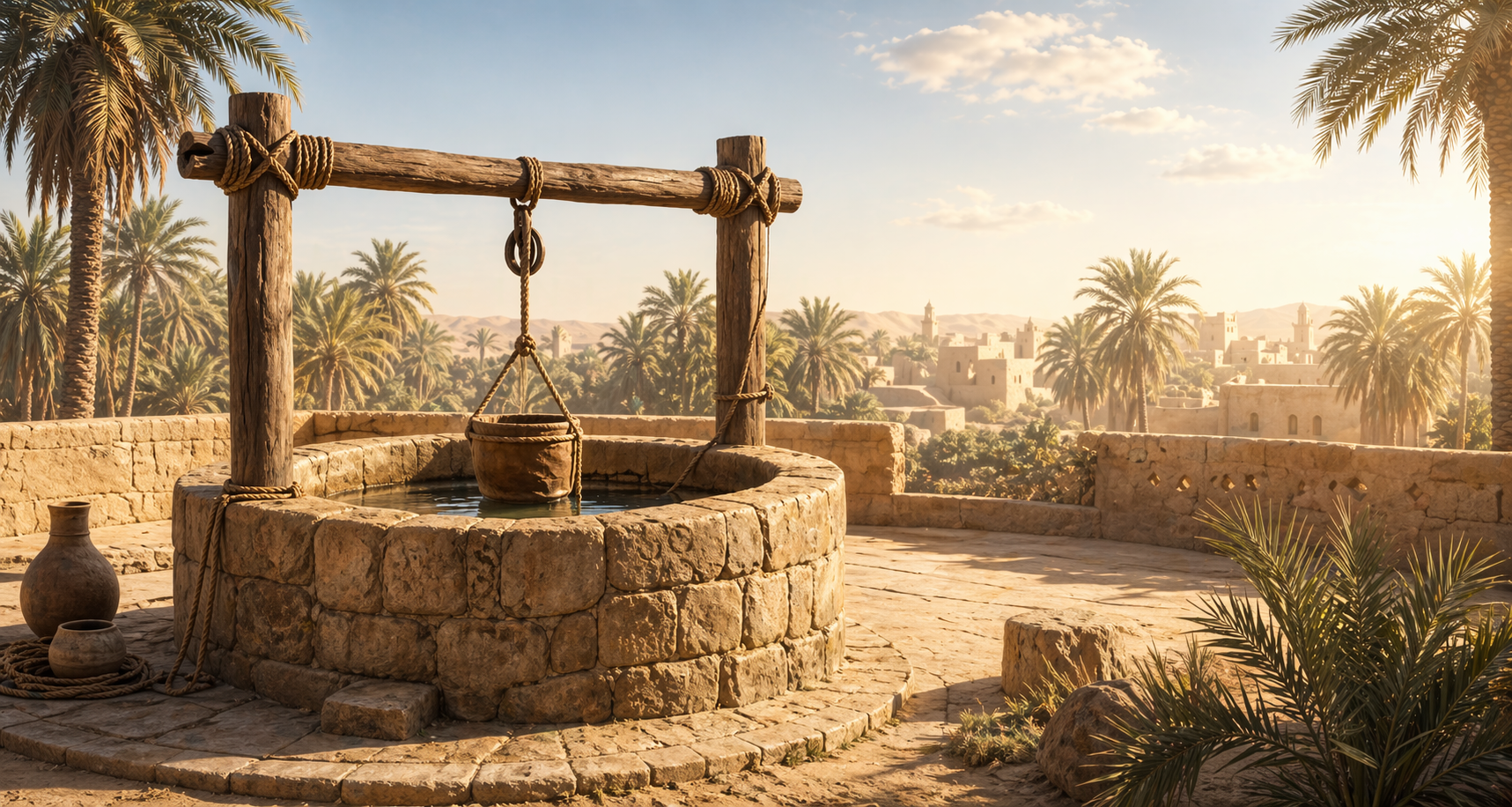
An ancient stone well in a desert oasis surrounded by palm trees
Illustration — a traditional well in an ancient Arabian settlement.
The First Waqf in Islam

The Well of 'Uthmān ibn ʿAffān (RA).

When the Muslim community first migrated to Madinah, fresh water was scarce. A single well — Bi'r Rūma — was owned by a man who sold water to the people at a price few could afford.

The Prophet Muhammad ﷺ said, "Whoever buys the well of Rūma and makes it free for the Muslims will have Paradise." 'Uthmān ibn ʿAffān (RA) purchased the well — first a share, then the whole — and dedicated it as a waqf for the community. From that day forward, anyone could drink from it freely.

The well still exists today, more than 1,400 years later. The surrounding land was eventually turned into a date-palm orchard whose proceeds continue to fund public welfare in Madinah. A single act of generosity — still flowing.

"We invest today. They heal tomorrow." — this is the same logic, translated into the language of modern medical training.

Core Principles

What makes a waqf a waqf.

These four principles have governed waqf institutions for over a millennium — and they govern MedWaqf today.

  • 01

    Perpetuity

    The dedication is permanent. The asset cannot be sold, gifted, or consumed — it is locked for the beneficiary class forever.

  • 02

    Preservation of Principal

    Only the yield, return, or usufruct of the asset may be used. The underlying capital is protected.

  • 03

    Public Benefit

    Returns must be directed toward a defined charitable purpose — education, healthcare, relief of the poor, or general welfare.

  • 04

    Ethical Stewardship

    The waqf must be administered by trustworthy stewards who preserve and grow the asset in alignment with Sharia principles.

Waqf in Islamic History

Civic infrastructure, before the welfare state.

For centuries, the waqf system sustained civilization — hospitals, universities, libraries, water systems, orphanages. Many were not funded by taxation, but by perpetual endowments.

Education

Scholars, physicians, and students were often supported through waqf-funded stipends, allowing them to pursue knowledge without financial burden. The great centers of learning — from al-Qarawiyyīn in Fez to al-Azhar in Cairo — were waqf institutions. Many of the world's earliest universities operated entirely on endowed revenues.

Healthcare

The bīmāristān — the classical Islamic hospital — was almost always a waqf. Physicians and patients were both supported by the endowment. Care was provided regardless of a patient's ability to pay, and these institutions remained operational across centuries despite political turbulence, because their funding was structurally independent.

Public Services

Water fountains, public baths, caravanserais, bridges, and soup kitchens were commonly maintained by waqf endowments. Entire neighborhoods in Ottoman, Mamluk, and Andalusian cities operated on this model — generosity institutionalized, rather than episodic.

Continuity

What made the waqf system extraordinary was its independence from short-term political or economic fluctuations. Because the asset itself was protected, communities could build institutions that outlasted dynasties, wars, and economic cycles. Permanence was the feature, not an accident.

Waqf in the Modern Context

Same principle.
New instruments.

The principle endures; the instruments have evolved. Modern Islamic endowments preserve capital and deploy only a measured share for public benefit — but they do so through diversified, Sharia-compliant financial portfolios rather than farmland, mills, and caravanserais.

MedWaqf applies this same model to physician training. Donated capital is invested across screened global equities, sukuk, and liquidity reserves — held in regulated custodial accounts, governed by a formal investment policy, and overseen by a physician-led board.

How This Connects to Our Mission

Just as the Well of ʿUthmān (RA) still flows, MedWaqf is built to endure.

We adapt the waqf model to the modern medical education system, where financial barriers significantly impact access to training. The goal is not to provide temporary relief — it is to build a lasting financial infrastructure that continuously reinvests in future physicians.

See how our waqf works → Become a founding donor